
Ever wonder how your local pizzeria gets that perfect, crispy-chewy base every single time? The secret weapon is a pizza stone for your pizza oven. It’s the single biggest upgrade you can make for your backyard setup, delivering that lekker (a South African term for great or delicious), professional-quality crust that a normal metal tray just can’t touch.
Key Takeaways
- Why a Stone? A pizza stone acts like a heat battery, absorbing intense heat and blasting it into your pizza dough for a super crispy, never-soggy crust. It mimics the floor of a traditional brick oven.
- Material Matters: Cordierite is the best choice for high-heat pizza ovens and braais due to its excellent thermal shock resistance. Ceramic is a good, budget-friendly option for conventional indoor ovens.
- Size is Critical: Always leave a 5 cm gap between the stone and the oven walls for proper airflow. A stone that’s too big will burn the base and leave the toppings raw.
- Preheat is King: Your stone needs to be scorching hot. Preheat it in a cold oven for at least 45-60 minutes at the highest temperature your oven can manage.
- Cleaning is Simple: Never use soap! Let the stone cool completely, scrape off any burnt bits, and wipe with a damp cloth. Stains are good—they build up a natural non-stick surface.
Why a Pizza Stone Is Your Secret to a Crispy Crust
Think of a pizza stone as a heat battery for your braai or oven. Unlike a thin metal pan that heats up and cools down in a flash, a stone is made from porous materials like cordierite or ceramic. Its whole job is to soak up and hold a massive amount of heat, creating an intensely hot and stable surface to cook on.
When you slide your pizza onto a properly preheated stone, that’s when the magic happens.
- Intense Bottom Heat: The stone immediately blasts the bottom of the dough with powerful, dry heat. This rapid cooking is what creates that beautiful “oven spring,” causing the crust to puff up just right.
- Moisture Wicking: The porous nature of the stone is brilliant—it actually draws moisture away from the dough. This is the absolute key to getting rid of a soggy bottom and achieving a light, crispy texture that can hold up all your favourite toppings.
- Stable Temperatures: Even when you open the oven door and lose a bit of heat, the stone holds onto its high temperature. This ensures the base cooks evenly and consistently from the edge right to the centre.
This simple diagram shows how a pizza stone radiates that intense, even heat directly into the base of the crust.
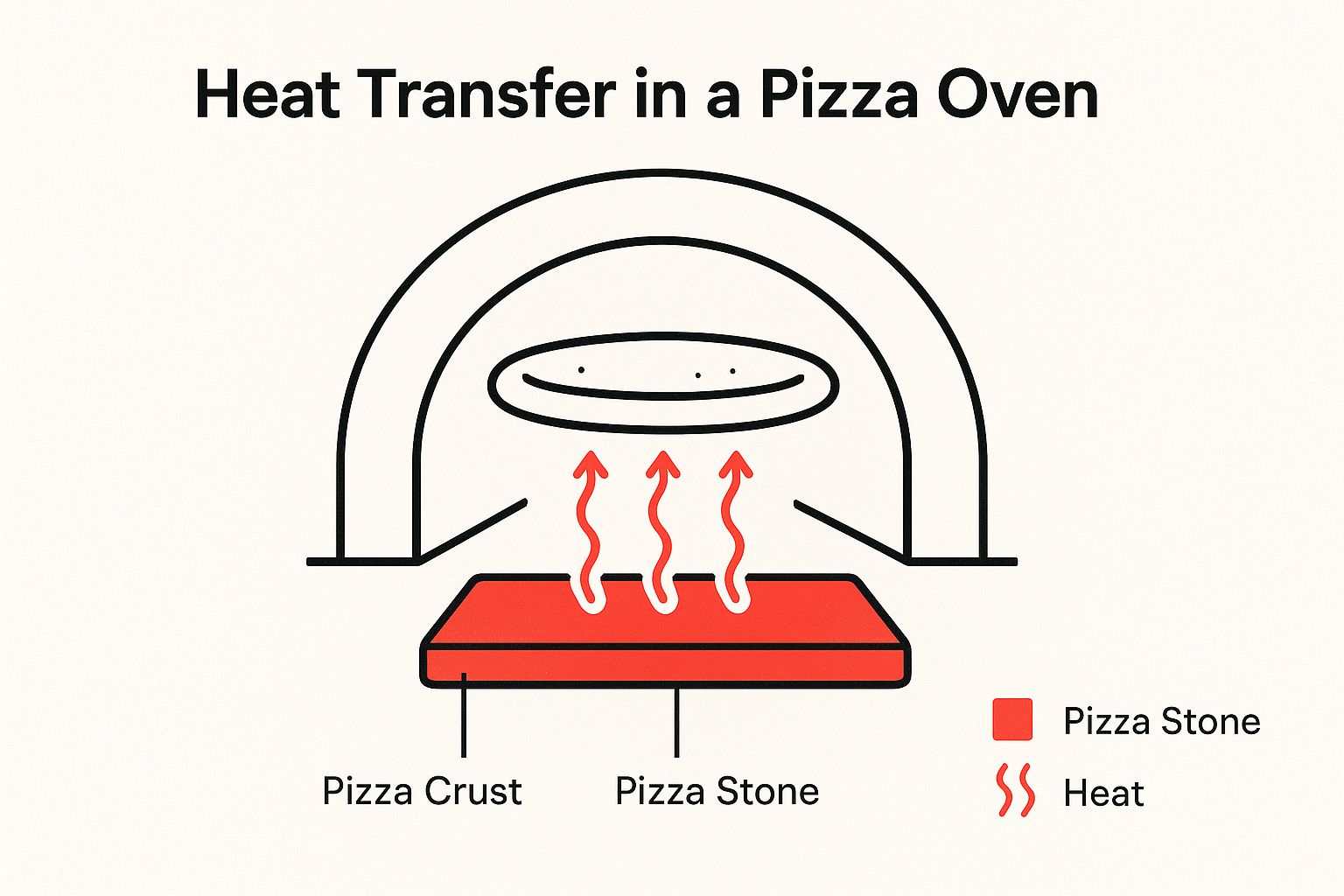
As you can see, the stone acts as a powerful heat source from below, basically mimicking the floor of a traditional wood-fired oven.
The Braai Analogy
To put it in local terms, using a pizza stone is like searing a rump steak on a blistering hot cast-iron grid. A standard oven tray is more like trying to cook that same steak in a cool pan—you’ll cook it through, sure, but you’ll never get that incredible crust and deep flavour.
The stone provides that initial, powerful sear that transforms a good pizza into a great one.
I remember my first few attempts at homemade pizza using a regular baking sheet. The toppings were cooked, but the base was always pale and a bit floppy. The moment I invested in a quality pizza stone and learned to preheat it properly, it was a total game-changer. The crust was suddenly crisp, airy, and full of flavour—just like at my favourite local spot.
Essentially, the stone recreates the cooking environment of a professional pizzeria’s brick oven, right in your backyard setup. It’s not just an accessory; it’s a fundamental tool for anyone serious about making authentic, delicious pizza at home.
Choosing Your Stone: Cordierite vs Ceramic
When you’re serious about making a proper pizza, you quickly realise not all pizza stones are created equal. Picking the right material is your first big decision. Staring down the options for a new pizza stone for your pizza oven, the two names that keep popping up are cordierite and ceramic. They might look the same, but they behave very differently under intense heat.
Think of it like choosing the right wood for your braai. Sure, any dry wood will burn, but kameeldoring gives you a completely different fire to rooikrans. The material of your stone directly affects how it handles heat, how long it lasts, and the final crispiness of your pizza base.
The Rugged Workhorse: Cordierite
Cordierite is a natural mineral famous for its incredible thermal shock resistance. In plain English, it can handle massive, sudden temperature changes without cracking. This is its superpower and the number one reason it’s the top choice for high-temperature pizza ovens that easily hit 400°C and beyond.
A cordierite stone is the bakkie of the pizza world—it’s tough, reliable, and built for rough conditions. You can launch a cold pizza onto a blazing hot stone without worrying it might shatter.
This durability makes it the perfect partner for any dedicated pizza oven or high-heat braai where crazy temperatures are just part of the game.
The Affordable All-Rounder: Ceramic
Ceramic pizza stones are made from kiln-fired clay. They’re fantastic at soaking up heat, which is exactly what you need to get a wonderfully crisp crust. They are also usually much easier on the wallet than cordierite, making them a popular starting point for many home cooks.
The catch? Ceramic’s big weakness is its vulnerability to thermal shock. A sudden change in temperature—like putting a cool pizza base onto a scorching stone or rinsing a hot stone with cold water—can cause it to crack.
I learned this lesson the hard way. My first two pizza stones were both ceramic. The first one, I didn’t let it cool down enough before cleaning it. The second, I heard that heartbreaking tink as I slid on a slightly too-cold pizza. That experience is why I now swear by my cordierite stone for my braai oven—it’s nearly bulletproof.
Head-to-Head Comparison: Cordierite vs Ceramic
To make your decision easier, let’s break down how these two stack up. When looking at these, it helps to think about the general properties of all durable stone and ceramic cookware, as the same principles of heat management and durability apply.
Here’s a side-by-side look at what you can expect.
Pizza Stone Material Comparison
| Material | Heat Capacity | Durability (Thermal Shock) | Price Range (R) | Best For |
|---|---|---|---|---|
| Cordierite | Excellent | Very High | R450 – R900 | Dedicated pizza ovens, high-temperature braai setups, and frequent use. |
| Ceramic | Very Good | Low to Moderate | R250 – R600 | Conventional home ovens, occasional use, and budget-conscious buyers. |
So, Which Pizza Stone Should You Choose?
Your choice comes down to your setup and how often you plan on firing it up.
- For a Dedicated Pizza Oven or High-Heat Braai: Go for cordierite. No question. The investment is slightly higher, but its ability to withstand extreme thermal shock is non-negotiable in this environment. It will last you for years and save you the frustration of a cracked stone.
- For a Standard Kitchen Oven: If you’re mainly baking pizza in your indoor kitchen oven, where temperatures are more controlled and top out around 250°C, a ceramic stone is a perfectly good and cost-effective option. Just remember to handle it with care and always let it cool down naturally.
Ultimately, the best pizza stone for a pizza oven is one that matches your equipment. For the serious South African braaier who wants reliability under intense heat, cordierite is the undisputed champion.
Finding the Perfect Size and Shape for Your Oven
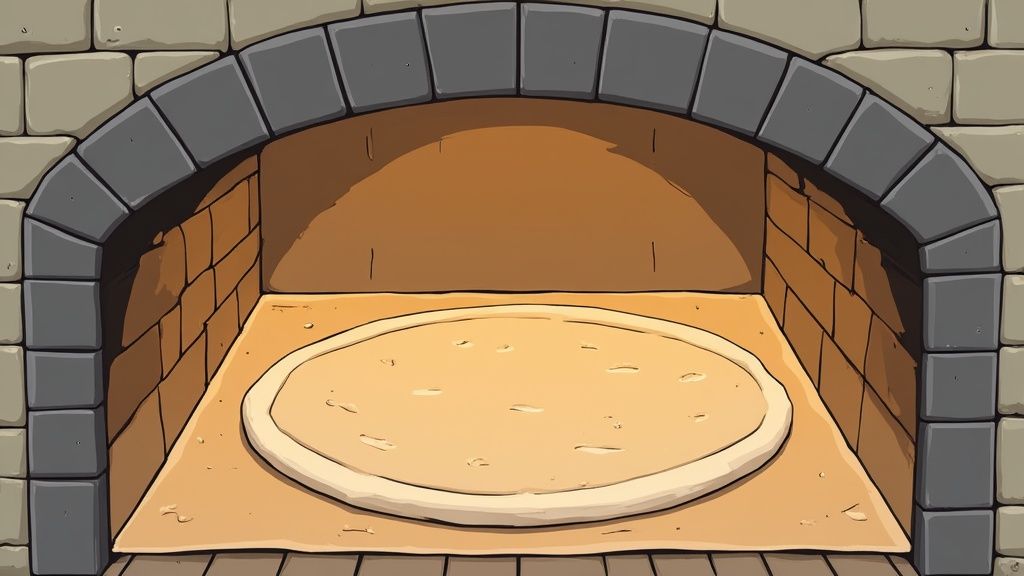
Choosing the right material is a massive step, but getting the size and shape wrong can undo all that hard work. Getting the dimensions spot-on is essential for airflow and cooking a perfectly even pizza.
Think about trying to light a braai with zero gaps between the coals—you’d just choke the fire. The same thing happens inside your pizza oven. A stone that’s too big blocks the flow of hot air.
This creates a serious problem. The base gets incredibly hot, leading to a burnt bottom crust, while the air trapped above can’t circulate properly to cook your toppings. The result? A pizza that’s burnt on the bottom and raw on top. Not lekker at all.
The 5 cm Airflow Rule
To avoid this disaster, there’s a simple but critical rule of thumb.
Always leave a gap of at least 5 centimetres between the edges of your pizza stone and the walls of your pizza oven. This space is the breathing room your oven needs for convection to work its magic.
This gap allows hot air to move freely from the heat source, roll up and over your pizza, and create a consistent cooking environment. It ensures your toppings cook at the same pace as your crust, giving you that perfect, balanced bake every time.
Round vs Rectangular Stones
Once you’ve got your measurements sorted, you’ll face another choice: the shape.
- Round Stones: This is the classic choice. It’s a perfect match for the shape of a standard pizza, which makes launching and turning your pie more intuitive. Round stones are ideal if you’re focused purely on making classic, round pizzas.
- Rectangular Stones: These are the heroes of versatility. A rectangular stone gives you a significantly larger surface area. This extra space is brilliant for launching your pizza without needing sniper-like accuracy. You can easily fit two smaller pizzas side-by-side, or even bake a long, beautiful focaccia.
The best shape depends on what you plan to cook most often.
The Cardboard Template Trick
Before you click “buy” on a new stone, here is a simple trick that has saved me from making a costly mistake more than once.
- Find a decent piece of cardboard.
- Cut it to the exact dimensions of the pizza stone you’re considering.
- Place this cardboard template inside your cold pizza oven.
This gives you a perfect visual of how the stone will actually fit. You can instantly see if you’ve left enough room for airflow and check for any awkward corners. It’s a five-minute job that guarantees you buy the perfect fit for your setup. Whether you are buying a new stone or looking at our range of complete pizza ovens, getting the size right is key.
How to Use Your Pizza Stone for a Perfect Cook
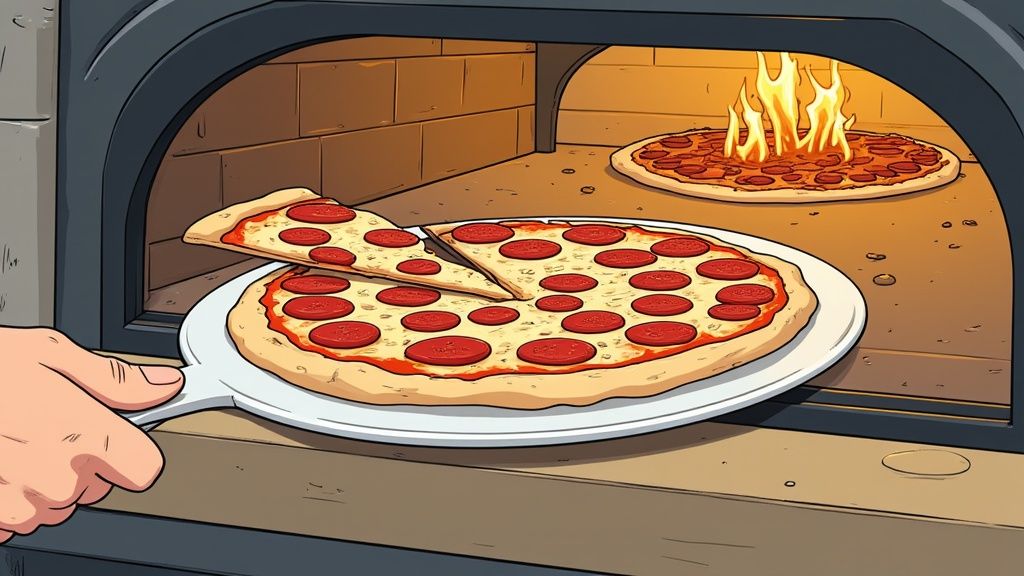
Alright, so you’ve picked the right material and found the perfect size. Now for the fun part—actually using your pizza stone for your pizza oven to cook something special. This is where a few key techniques can make all the difference.
Getting this right turns your oven into a high-performance pizza machine. The steps are simple, but each one is crucial for that perfect, crispy crust.
The All-Important Preheat
If there’s one step you cannot skip, it’s the preheat. Chucking dough on a lukewarm stone is just asking for a soggy base. That stone needs to be scorching hot to deliver the initial blast of heat that cooks the crust in seconds.
Think of it like this: you wouldn’t toss a tjop (a chop of meat, like a lamb chop) onto a cold braai grid, would you? Same principle. The stone needs time to soak up heat to do its job properly.
A massive rookie error is underestimating how long this takes. Your oven’s air temperature might hit its target quickly, but a dense stone needs much longer to get fully saturated with heat. Patience here pays off.
For the best results, always place your cold stone into a cold oven and let them heat up together. This simple move prevents thermal shock, which can crack ceramic stones.
Step-by-Step Guide to the Perfect Cook
Here’s the simple process I follow every time I fire up my pizza oven. It’s a bulletproof method that delivers consistent results.
- Preheat Your Stone and Oven: Place the stone on the middle or lower rack of your cold pizza oven. Crank the oven to its highest temperature—usually between 250°C and 450°C. Let that stone preheat for at least 45 to 60 minutes. No cheating!
- Check the Stone Temperature: For a proper Neapolitan-style pizza, you want the surface of your stone to be around 350-400°C. An infrared thermometer is a brilliant tool for this; it gives you an instant, accurate reading.
- Prepare Your Pizza for Launch: While the stone is heating, build your pizza on a well-floured pizza peel. A mix of flour and semolina on the peel works like a charm, helping the dough slide off without a fight. Give the peel a little shake—if the pizza moves freely, you’re good to go.
- Launch with Confidence: Open the oven door and, with one quick, confident motion, slide the pizza from the peel onto the centre of the hot stone. Don’t hesitate, because that’s when the dough sticks.
- Cook and Rotate: Cook the pizza for a couple of minutes. Most ovens have hot spots, so I always give my pizza a quick 180-degree turn about halfway through the cook to ensure it browns evenly.
- Remove and Rest: Once the cheese is bubbling and the crust is golden brown, use the peel to slide the pizza out. Let it rest for a minute before slicing.
Troubleshooting Common Pizza Problems
Even with the best technique, things can go wrong. Here’s how to fix common issues.
- Soggy Centre: The stone wasn’t hot enough. Next time, give it another 15 minutes to preheat.
- Burnt Bottom, Raw Toppings: Your stone is too hot, or your pizza is too close to the flame. Try moving the stone to a higher rack or dialling back the oven’s temperature a bit.
- Pizza Stuck to the Peel: This usually happens if the dough is too wet or you haven’t used enough flour. Be generous with the semolina and work quickly once the sauce is on.
Getting consistent results means trusting your oven’s temperature. It’s often worth checking if your oven’s dial is accurate; for ultimate precision, you can learn how to calibrate your oven thermometer. And if you’re thinking about a new setup, having a look at options like those in our Al Fresco ovens range can give you better heat control.
Pizza Stone Care and Maintenance
A quality pizza stone is a real investment. With a little bit of care, that simple slab of cordierite will last you for years, getting better with every pizza you pull off it. But there are a few golden rules you must follow to avoid ruining it.
Your pizza stone is porous. This is fantastic for wicking moisture from the dough, but it also means it’ll soak up liquids like a sponge. This brings us to the number one enemy of any pizza stone: soap.
Never, ever use dishwashing liquid or any soap to clean your stone. It’ll seep into the pores, and your next few pizzas will have a distinct, soapy flavour. Trust me, it’s a mistake you only make once.
The Right Way to Clean Your Stone
Cleaning your pizza stone for your pizza oven is actually dead simple. It’s more about what you don’t do.
- Let It Cool Down Completely: This is non-negotiable. After you’ve finished cooking, just leave the stone inside the oven or braai to cool down naturally. This can take an hour or two.
- Scrape Off the Big Bits: Once it’s cool, grab a bench scraper or metal spatula. Gently scrape off any burnt-on cheese or chunks of food.
- Wipe with a Damp Cloth: Lightly dampen a cloth with plain water—no soap!—and give the surface a quick wipe.
- Air Dry Thoroughly: Let the stone air dry completely before putting it away. Storing it while damp can lead to mould.
That’s it. No hectic scrubbing, no soaking, and definitely no chemicals.
Embrace the Stains
Over time, your cream-coloured stone will start to look a bit used. It will develop dark spots and oily patches. Do not panic! This is a good thing.
Those splotches and darkened areas are the signs of a well-seasoned stone. Think of it like the patina on a cast-iron pan. This natural seasoning creates a more non-stick surface, making it easier to launch your pizzas over time.
A stained stone is a happy stone. It tells a story of many lekker pizza nights. Resist the urge to scrub it back to its original condition; you’ll only be stripping away the performance you’ve worked to build up.
The Ultimate Sin: Thermal Shock
Finally, the quickest way to destroy any pizza stone is through thermal shock. This happens when you expose it to a sudden, extreme change in temperature. The classic mistake is plunging a hot stone into cold water. The rapid contraction will cause it to crack. Always let it cool down on its own.
The Rise of Home Pizza Making in South Africa
Making a proper, restaurant-quality pizza at home is no longer a fringe hobby—it’s fast becoming a massive part of South Africa’s vibrant braai culture. The days of simply throwing a tjop on the grid are far from over, but more of us are getting ambitious with our backyard cooking.
There’s been a huge shift. People are now gladly investing in quality gear to create unforgettable food experiences right in their own lapa. This was accelerated by the pandemic, with many of us spending time at home perfecting new skills, from baking sourdough to mastering the perfect pizza.
From Hobby to Passion
This boom isn’t just about the food; it’s woven into the growing DIY and artisanal food movements in SA. We’re more curious about where our food comes from and the craft behind making it. This passion has fuelled a massive demand for accessories that deliver professional results, like a high-quality pizza stone for a pizza oven.
The numbers tell the same story. The South African pizza oven market was sitting at roughly R1.5 billion in 2023 and is only expected to climb. This growth points to a clear trend: South Africans are actively seeking out better tools to get that restaurant-level quality in their own homes.
More Than Just a Purchase
Investing in the right equipment is about more than just a transaction. It’s about joining a passionate community of home cooks dedicated to mastering the ancient craft of fire and food. Buying a great pizza stone for a popular setup like the Jetmaster wood pizza oven isn’t just about getting another tool. It’s a statement.
It’s a commitment to creating that perfectly crisp, leopard-spotted pizza crust with your own two hands. This growing community is all about sharing tips, celebrating the wins, and proving that the best pizza in town can come straight from your own backyard.
Frequently Asked Questions (FAQ)
Here are direct answers to the most common questions we get about using a pizza stone.
Can I use my pizza stone on a regular braai?
Yes, absolutely. Place the stone on the grid—never directly on the hot coals—and let it heat up slowly with the braai. It works especially well in a kettle braai where you can put the lid on to create an oven-like environment.
Why is my pizza sticking to the stone?
This is usually because the stone wasn’t preheated for long enough or the dough is too wet. Ensure the stone preheats for at least 45-60 minutes and use a generous dusting of flour or semolina on your pizza peel to help the pizza slide off smoothly.
Do I need to season my pizza stone?
No, never. Do not season a pizza stone with oil like a cast-iron pan. The porous stone will absorb the oil, which will smoke and turn rancid at high temperatures, making your pizza taste unpleasant. The stone seasons itself naturally over time.
How do I clean the black spots off my stone?
You don’t, and you shouldn’t try. Those dark spots are a natural patina from baked-on cheese and oils, which creates a non-stick surface. Just scrape off any loose food bits once the stone is completely cool—the stains are a sign of a well-used, effective stone.
What is the best material for a pizza stone in a high-heat oven?
Cordierite is the best material for a dedicated pizza oven or a hot braai. Its superior thermal shock resistance means it can handle extreme temperature changes without cracking, unlike ceramic which is more fragile.
Globally, deck and stone ovens held a 36.21% market share in 2024, showing a clear preference for the authentic results from stone-based cooking. This trend is exactly why a quality pizza stone for a pizza oven is becoming a must-have for home chefs across South Africa. You can read the full research about pizza oven market trends here.
Ready to master that perfect crispy crust? Explore the full range of high-quality pizza ovens and accessories at Braai Culture and take your braai game to the next level. https://braaiculture.com
